
SAFEX And Parity
Across 16 November to 20 November 2026, the week to Friday's close, the December 2026 white-maize SAFEX mark moved from R4,151/t to R4,074/t, down R77/t. The December 2026 yellow-maize SAFEX mark moved from R3,964/t to R4,025/t, up R61/t.
Both markets nevertheless lost ground to export parity as parity firmed, improving South African origin's export competitiveness. White's outright decline did more of the adjustment, while yellow gained but failed to keep pace with parity; neither relationship by itself confirms new export business.
Supply Balance
The September SAGIS monthly balance confirmed ample maize stocks, with white carrying the heavier buffer. That caps upside, but holder caution around next-season rainfall keeps nearby supply from behaving as freely as the balance alone might suggest.
Cape import economics remain workable, but the existing programme is booked flow rather than proof of a current spot opening. Inland local yellow maize remains below full import parity, keeping the domestic balance from reading uniformly tight.
Regional Flow
SAGIS flows through 13 November show regional demand continuing, led by white-maize movement to Zimbabwe and Botswana and yellow-maize movement across neighbouring markets. These are realised flows, not evidence of a new tender at current prices.
FEWS NET expects Zambia to retain more maize in anticipation of a smaller, later harvest. If Zambia has less grain to offer Zimbabwe, South African exporters could face less competition there. FEWS NET Zambia outlook.
Planting Weather
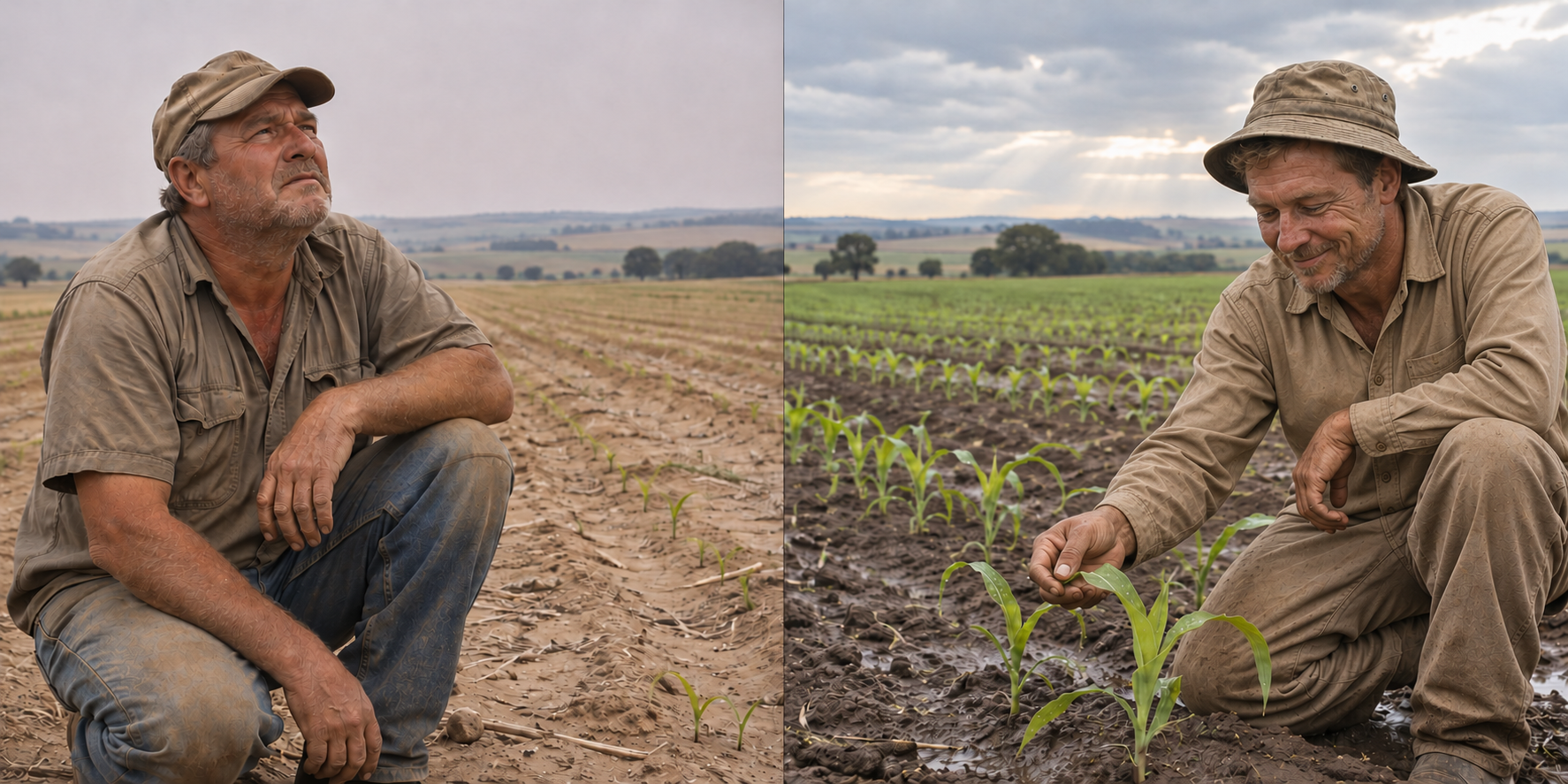
Rain has been uneven, with the western belt notably drier than normal even as eastern areas received useful falls; El Niño risk into the next planting window remains open. The crop balance remains comfortable, but planting confidence requires broader follow-through rather than isolated falls.
What we are watching
We are watching whether rainfall broadens enough to establish the new maize crop while the standing stock buffer continues to restrain prices. The capped-upside read would change if El Niño-linked dryness begins to threaten establishment across the planting belt or confirmed new export demand absorbs more of that buffer.
Reported market talk — not independently confirmed
Agri Intel Africa reports that some Zambian growers may switch irrigated land from maize seed production to soya. The area that may switch and the effect on seed availability remain unconfirmed. Agri Intel Africa episode, 17 November.
Across the commodity complex
Global grains
Black Sea disruption redirected wheat demand towards Europe, prompting France to raise its non-EU export forecast. Ukraine warned that continued Russian attacks and closed ports could halve its next harvest as farmers cut plantings.
Softs
China is projected to raise sugar output and reduce imports in the new season as consumption holds steady, while Germany’s industry association forecasts a sharp fall in refined beet sugar production. Ghana also plans to end raw cocoa-bean exports and process its crop domestically.
Energy
The IEA’s World Energy Outlook models lower global oil demand under a stronger policy response than under its stated-policies scenario. A separate case examines how bypass pipelines, alternative supplies and lower demand could reduce dependence on Hormuz. Commodity3 also reported Japan’s proposal for an Asian task force on oil stockpiling. IEA World Energy Outlook.
Freight
Black Sea freight disruption deepened after a drone strike sank a wheat-carrying vessel off Bulgaria, while security risks and the continued Azov closure restricted grain vessel calls. Baltic and Far East grain freight remained firm.
Metals
Gold fell to a one-year low as elevated US Treasury yields and a stronger dollar tightened financial conditions. China’s crude steel output dropped to its lowest level of the year as weak demand, softer exports and thin margins curtailed production.